B2B / SaaS
Ed-tech
SUMMARY
Led the design of a new AI-powered lesson planner, integrating it into a legacy platform to reduce teacher workload by 30% for 600,000 students. My work directly led to securing board approval and $2M+ in project funding.
TIMELINE
May - Nov 2024 (6 months)
ROLE
Product Designer
TEAM
3 Designers (Emily Ho, Henry Proudlove, me)
1 UXR (Rita de Almeida)
+ Over 40 AI/ML devs & SWEs
TOOLS
Figma (Prototyping & UI Design), Storyboard, HTML/CSS
ABOUT
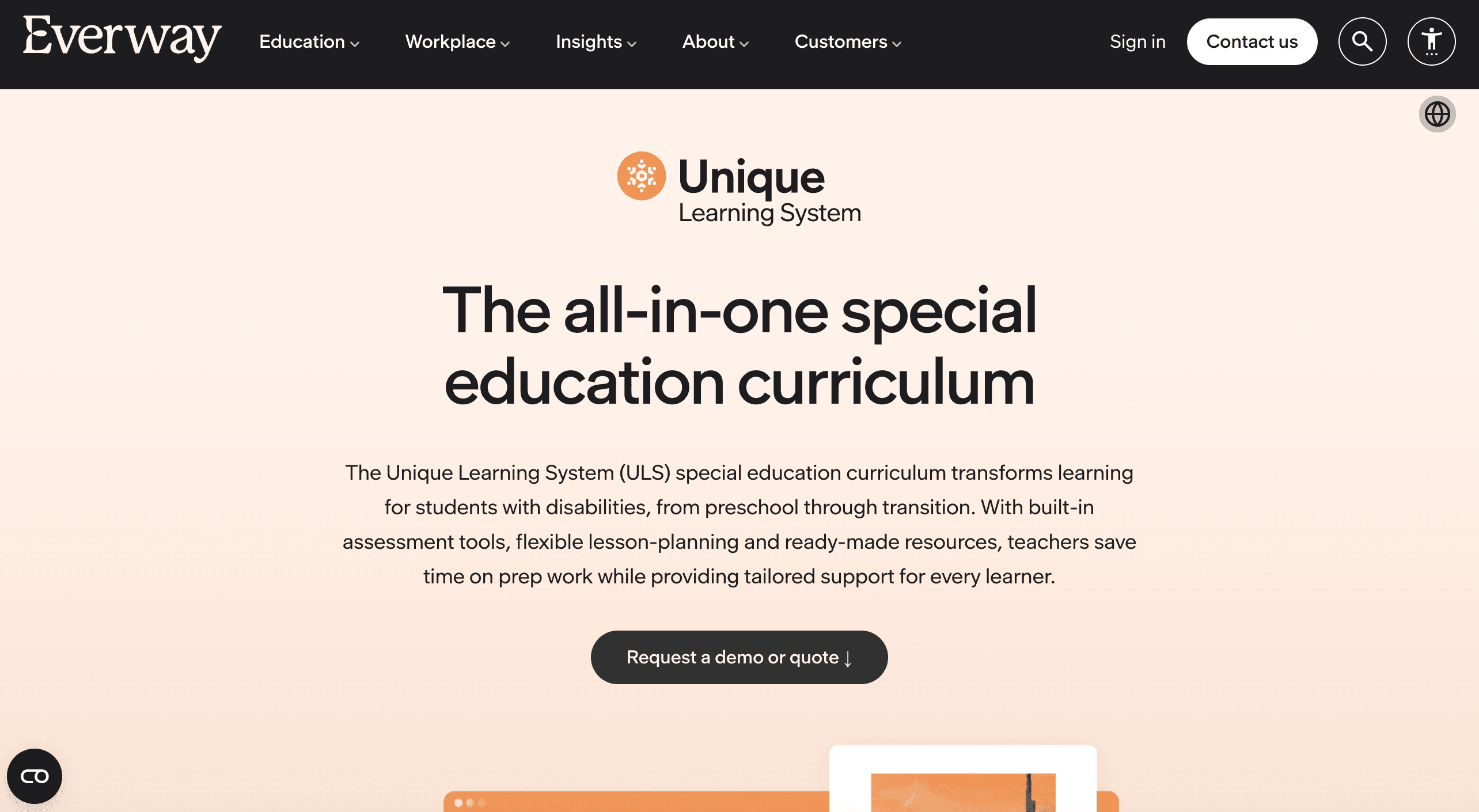
Their #1 product, Unique Learning System (ULS), is a special education curriculum platform that transforms learning for students with disabilities, from preschool through transition.



CONTEXT
The platform was built on a shaky technical framework, and it was growing into a complex and bloated product on an unstable base. Despite housing high-quality content, the platform's poor usability and navigation was preventing users from accessing its true value.

A disorganized UI with poor usability and and navigation.
THE PROBLEM - USER
Across all experience levels, special education teachers are burdened by the immense, manual effort of concurrently meeting government standards and individual student needs in lesson planning, consuming excessive time.

User Models: Based on existing user research our UXR has done, we defined the user models as new to the industry, mid-level, and expert-level.
THE PROBLEM - BUSINESS
Our position is at risk. User feedback indicates that our platform is not solving their biggest challenge: planning lessons and sourcing materials, due to poor usability and navigability. This is more than a user experience issue, and is a direct threat to our revenue, market share, and brand identity.
USER JOURNEY + AI
Based on the user journey mapping we did for special education teachers, lesson planning and material preparation itself and tailoring them for each student's unique needs demands most time. Despite the extensive preparation and planning, teachers still need real-time adjustments.
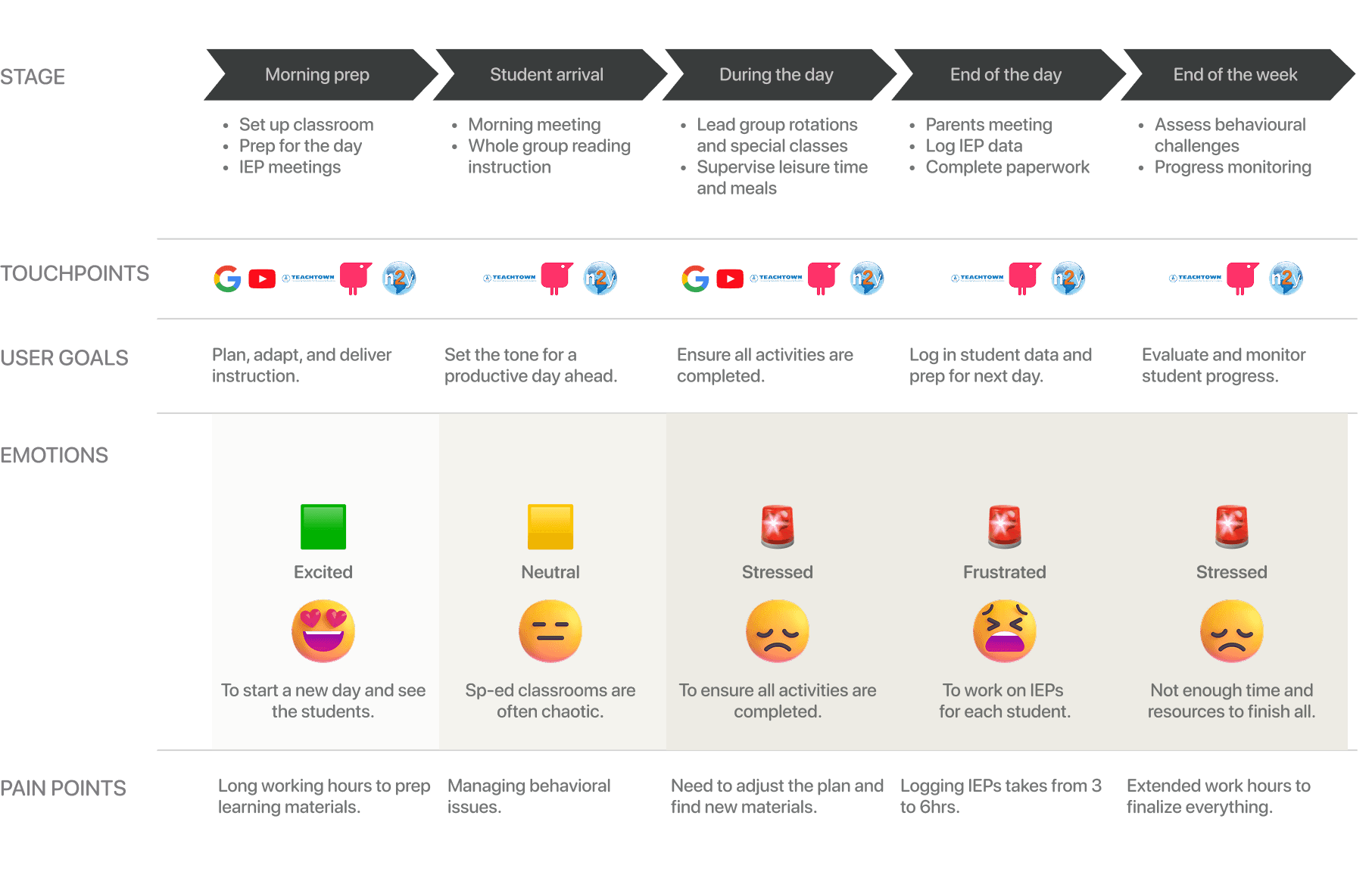
User Journey Mapping: Special education teachers have to manually tailor lessons for each subgroup with different learning needs.
APPROACH
Our vision is to transform teaching with an advanced AI-driven lesson planning tool. By automating the creation of personalized curricula, we will free up invaluable teacher time, mitigate burnout, and enable them to focus more deeply on direct student engagement and the art of teaching.

Low-fidelity sketches on AI-driven solutions.

Storyboard based on existing user research on special education teachers.
RAPID PROTOTYPING
We visualized key AI interactions for special education teachers within our lesson planner. The next step is user testing, where we'll gather direct feedback on the tool's usability and practicality in their daily workflow.
Prototype flow 1: Generate next week’s plan with Class Aide
Prototype flow 2: Regenerate, interact & customize
Prototype flow 3: Global changes via Class Aide
USER INTERVIEWS & TESTING
We conducted successful usability interviews with 8 special education teachers, who were unanimously enthusiastic about the AI lesson planner's potential to transform their workflow and reduce planning time. This strong, positive feedback successfully garnered the board's approval to advance our vision project.

User Interviews & Usability Testings: User quotes and observations next to the relevant screen.
USER RESEARCH INSIGHTS
User feedback shows a strong, positive reception, but hinges on a key condition: while teachers are eager to use AI for efficiency, they must have ultimate control over customization. Features enabling easy plan modification and IEP integration were highly valued, while the "Class Aide" feature requires more clarity.
1.
Positive Reception:
Users of all backgrounds were enthusiastic, viewing the product as a solution to a major pain point.
2.
Open to AI with Caveats:
Teachers are open to AI for its time-saving benefits but require full control and customization over the results.
3.
Valued Features:
The most appreciated features were those that made workflow easier, such as intuitive navigation, simple plan modification, and integrated student tracking.
4.
Ambiguity of the Class Aide Feature:
The Class Aide feature intrigued users, but its functionality and purpose were unclear to them.
COLLABORATION & SCOPING
As a key member of this company-wide vision project, I collaborated in weekly sessions with a multidisciplinary team of over 40 specialists. Our collaborative process closed the gap between technology and pedagogy, leading to a robust project scope that earned enthusiastic, team-wide buy-in.

We worked with ML/AI team to understand the ML architecture and its opportunities in our platform.

We held cross-functional team design reviews where everyone was invited to leave feedback on the designs.

Not just the design team, but the wider team (engineering, pedagogy experts etc) were invited to the user interviews.

We worked with ML/AI team + backend engineering team to understand how to map out the AI lesson planner.
IMPACT
Following the board approval which secured full funding for its future development, we worked on scoping and launching a MVP platform a high-fidelity pilot platform. We achieved an overwhelmingly positive 100% approval rate from our qualitative research, validating the product's direction. Teachers will be able to reduce their weekly lesson planning and material sourcing time by an average of 30%, directly addressing their primary pain point of unsustainable workload.
The pilot's success and compelling user feedback were instrumental in securing the board's approval and full funding for the platform's public launch.